


 Austria
 Belgium
 Denmark
 Estonia
 Finland
 France
 Germany
 Greece
 Iceland
 Ireland
 Italy
Italy
 Liechtenstein
 Netherland
 Norway
 Poland
 Portugal
 Spain
Spain
 Sweden
 Switzerland
 Turkey
 United Kingdom
 Australia
 Fiji
Fiji
 Hong Kong
 India
India
 New Zealand
 Indonesia
 Japan
Japan
 Malaysia
 Philippines
 Singapore
 Thailand
 Brazil
 Chile
Chile
 Colombia
 Mexico
 Peru
Peru
 USA
USA
 Bahrain
 Israel
 Morocco
 Oman
Oman
 UAE
UAE
 Saudi Arabia
 Tanzania
How electrification is reshaping the future of hospitality operations
Switching to all-electric has been on the hospitality agenda for a while, but in 2026 it’s starting to feel more immediate. Partly because of energy volatility, but also because sustainability claims are being treated less like a marketing exercise and more like something you need to back up with real numbers. Everyone – from landlords, lenders, corporate customers and increasingly the government – is asking for clearer evidence of energy performance and carbon progress… not just warm words and empty sentiment.
At the same time, electrification is becoming normalised in everyday life. Zapmap’s market stats show that in December, 44.8 per cent of new UK cars registered were plug-in (fully electric or plug-in hybrid). That’s a useful proxy for what guests and teams will increasingly expect to see at hotels, venues, and food-led sites. Taken together, these trends make electrification far more than a forward-looking idea. It has become a proven, high-impact route to lowering emissions, improving comfort, and evidencing performance in a way that withstands serious scrutiny.
How heat pumps support efficient, low carbon hot water and heating
For many hotels, leisure sites, and larger food-led venues, heating and hot water make up a large share of energy spend and emissions. For this reason, heat pumps are often the cornerstone of electrification because they can deliver more heat energy than the electricity they consume. In simple terms, they move heat rather than generating it through combustion. This can support both carbon reduction and a clearer reporting story, because it directly reduces onsite fossil fuel use.
The other reason heat pumps are back on the agenda is increased financial support. The Boiler Upgrade Scheme offers £7,500 towards air-source or ground-source heat pumps and is open to small and medium non-domestic buildings in England and Wales. For hospitality groups with mixed estates, that kind of additional aid can make pilots and phased rollouts easier to justify.
For businesses with larger premises, a Building Energy Management System (BEMS) is the unglamorous part that makes electrification pay. It gives you visibility and control across heating, cooling, ventilation, and hot water – tightening schedules, zoning, and setpoints so machinery runs when it needs to, not by default. Done properly, it provides measurable performance, rather than an install and hope.
How electrifying the kitchen improves efficiency and control
In kitchens, electrification is often framed as a culture shift away from open flame cooking, but the commercial case is increasingly operational. UKHospitality has argued that electric equipment – particularly induction – can deliver higher efficiencies than gas, and that it’s easier to connect electric kit to digital controls and monitoring for clearer energy visibility. For operators trying to prove progress to stakeholders or customers, that measurement piece matters as much as the technology itself. It means, like with BEMS, you can track usage, identify peaks, and relate changes back to covers, occupancy, or production.
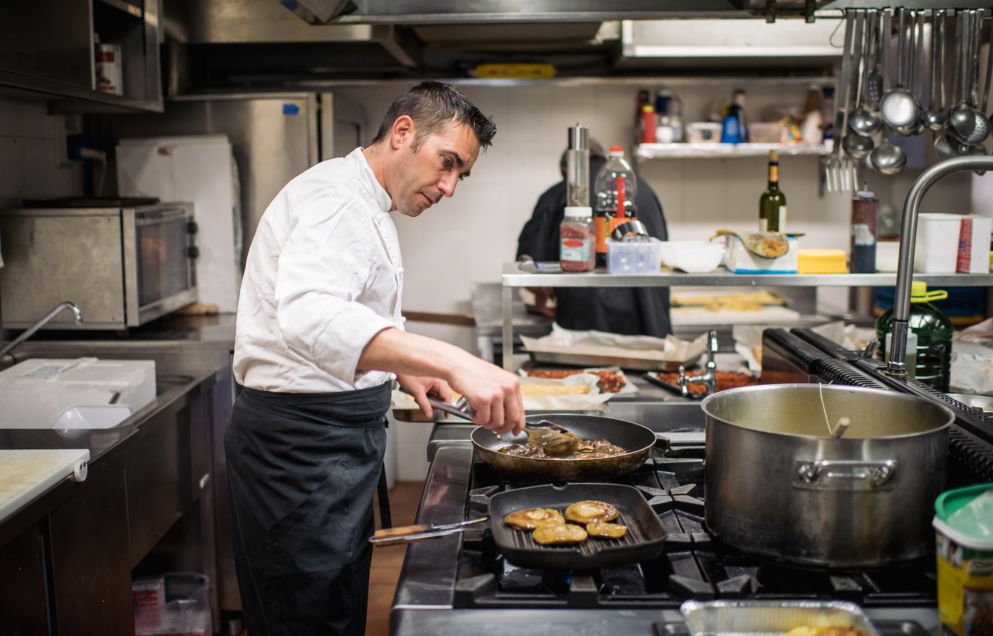
Electrification is also about getting the most up-to-date technology. Combi ovens, fryers, salamanders, and hot holding can all be electrified, but the sleeper win for many restaurants is refrigeration – because it runs 24/7. Newer fridges and cold rooms cut waste through better insulation, tighter seals, and smarter controls/defrost – small changes that add up on bills. The Carbon Trust highlights meaningful savings potential from upgrading catering refrigeration to best-practice standards.
EV charging and fleet electrification
With plug-in registrations moving at pace, EV charging is increasingly part of the hotel guest proposition rather than a sustainability badge. For many sites, it also supports dwell time and repeat visits and it can be relevant to corporate travel policies as organisations tighten their own reporting.
Government support helps here too. The Workplace Charging Scheme can cover up to 75 per cent of purchase and installation costs, capped at £350 per socket, for up to 40 sockets across an applicant’s sites. At the time of writing, funding is currently confirmed until the end of March, with future arrangements not yet announced.
Unlocking value through onsite generation
Onsite generation is where electrification starts to feel like a commercial advantage, rather than an efficiency drive. For hospitality sites with long opening hours and daytime loads (kitchens, laundry, leisure, front-of-house systems), solar PVs shave the amount you buy from the grid, and batteries can help you use more of what you generate while reducing this usage at peak demand. Any surplus you don’t use can, in many cases, be exported for payment via the Smart Export Guarantee, which applies to businesses generating renewable electricity.
Electrification strengthens resilience
Electrification is increasingly less about being green and more about operational control. For hospitality – where disruption is costly – moving heat, kitchens, and transport onto electricity can reduce single-fuel dependency, improve monitoring through controls and data, and open up options like onsite generation and storage.
It does not remove risk, but it can make outages and cost shocks easier to absorb and recover from. In addition, stronger, better-documented resilience can improve underwriting confidence, even if it doesn't automatically cut premiums. With the investment case further strengthened by new tax incentives such as full expensing for qualifying plant and machinery, moving away from fossil fuels is becoming increasingly attractive.

Ultimately, electrification isn’t just about cutting carbon – it’s about building a more resilient, future-proof operation. With the right mix of heat, kitchen, and onsite energy solutions, hospitality businesses can take real control of performance. At Howden, we’re helping operators navigate that shift with clarity, confidence, and measurable results.
Your business is built on great service. Ours is too.
At Howden, we understand that hospitality is all about people - guests, staff, and the experience you deliver every day. Whether you run a restaurant, hotel, or bar, we provide handcrafted hospitality insurance designed to protect what matters most: your people, your income, and your reputation.
While we manage the risks, you can focus on what you do best, delivering memorable experiences to your customers.
