


 Austria
 Belgium
 Denmark
 Estonia
 Finland
 France
 Germany
 Greece
 Iceland
 Ireland
 Italy
Italy
 Liechtenstein
 Netherland
 Norway
 Poland
 Portugal
 Spain
Spain
 Sweden
 Switzerland
 Turkey
 United Kingdom
 Australia
 Fiji
Fiji
 Hong Kong
 India
India
 New Zealand
 Indonesia
 Japan
Japan
 Malaysia
 Philippines
 Singapore
 Thailand
 Brazil
 Chile
Chile
 Colombia
 Mexico
 Peru
Peru
 USA
USA
 Bahrain
 Israel
 Morocco
 Oman
Oman
 UAE
UAE
 Saudi Arabia
 Tanzania
Adapting, innovating, surviving: Hospitality’s 2025 journey
After a wave of pub closures, a continuing cost of living crisis, and tax hikes, 2025 would seem to have been another tough year for hospitality. But for many businesses, the year was defined less by dramatic highs and lows and more by steady financial pressure.
As Jane Pendlebury, CEO of HOSPA, puts it: “It’s been a year of limited growth. That’s not to say it hasn’t grown at all but compared to 2023 and 2024 it’s been more restricted, with unpredictable demand and mounting pressures, particularly for smaller businesses.” Yet even with higher payrolls and stubborn inflation in food and utilities, the sector showed remarkable resilience, with many businesses adapting: holding their ground while finding creative ways to improve.

Budget pressures and policy shifts
Last year’s 2024 Budget was a difficult one for the sector, as many experienced higher wage requirements and increased employer liabilities, inflating payroll costs from April 2025. Industry efforts to soften existing measures were not reflected in the Autumn 2025 Budget.
The Chancellor confirmed a lower business rates multiplier, yet many operators still expect higher bills as new valuations take effect and existing discounts end by March 2026. Alcohol duty will rise with inflation from February 2026, while expanded sugar levies are likely to increase costs for cafés, bars, and casual dining operators.
Local authorities were given new powers to introduce tourist taxes, which has added a new agenda point for hospitality and tourism businesses to consider. For many operators the latest budget did not offer financial support, as there was no reduction in VAT or the easing of previous employment costs.

Reflecting on recruitment and job losses in hospitality
Recruitment remained challenging – although less severe than immediately after the pandemic. Brexit and changing workforce expectations continue to shape the labour market, with shortages particularly sharp for skilled roles such as chefs. Rising payroll costs made it harder to sustain previous staffing levels, and some businesses downsized simply to stay viable.
There were positives too. More operators invested in training, professional development, and wellbeing, recognising that supporting their people plays a direct role in retention and performance. Rather than focusing solely on filling vacancies, many began addressing absence, workload pressure and employee support, particularly in larger hotels where turnover and burnout have a clear cost. Ongoing pressure across the hospitality workforce reinforces the need for wellbeing approaches that are practical, affordable and easy to deliver.
Why sustainability still mattered in 2025
Sustainability may have slipped from the top of the hospitality agenda of priorities, but it never disappeared. Local sourcing remained important, as did the pursuit of accreditations such as B Corp. Strong environmental credentials helped larger brands win corporate contracts and attract guests who judged hotels on social and environmental standards.
“For businesses that have committed properly to sustainability, it doesn’t cost money, it generates money,” says Pendlebury. “If you can’t meet ESG criteria, you simply won’t win certain corporate contracts.”
IHG, for example, has seen more corporate clients prioritise hotels with clear sustainability data through its Green Engage programme. For businesses willing to commit time and resources, sustainability became more of a commercial asset than a cost.
The digital concierge: AI’s role in the guest experience
Technology took another significant step forward. Artificial intelligence and automation began to reduce routine administrative tasks – from occupancy analysis to reporting – freeing teams to focus more on service. Hotels used AI to support bookings, sharpen forecasting, and personalise communications, while customers increasingly embraced self-check in, app-based services, and smarter loyalty programmes.
Pendlebury notes that the biggest gains so far have been in efficiency rather than headline-grabbing innovation. “AI is taking away a lot of the more boring data entry and data processing, such as the number-crunching and spreadsheets, freeing staff up to focus on the part of hospitality they actually enjoy: dealing with guests.” For many operators, these tools helped absorb some of the pressure created by ongoing staff shortages.
Experiential nights: The rise of immersive hospitality
On the customer side, demand for memorable experiences continued to grow. Gaming nights, immersive performances and alcohol-free socials became more common, alongside a notable rise in wellness-led stays centred on sleep, recovery, fitness, or nutrition. Even hotels without full spa facilities created their own wellbeing moments, responding to guests who wanted something above and beyond accommodation.
Operational risk: Navigating the compliance and cybersecurity landscape
Insurance and compliance pressures also sharpened. Several well publicised cyber incidents pushed operators to take data security more seriously, with many reassessing their systems after recognising how vulnerable hotels can be to ransomware. New rules governing tips and service charges added administrative complexity and increased the risk of compliance mistakes, while ongoing concerns about data handling and employment practices encouraged businesses to review their exposure more regularly.
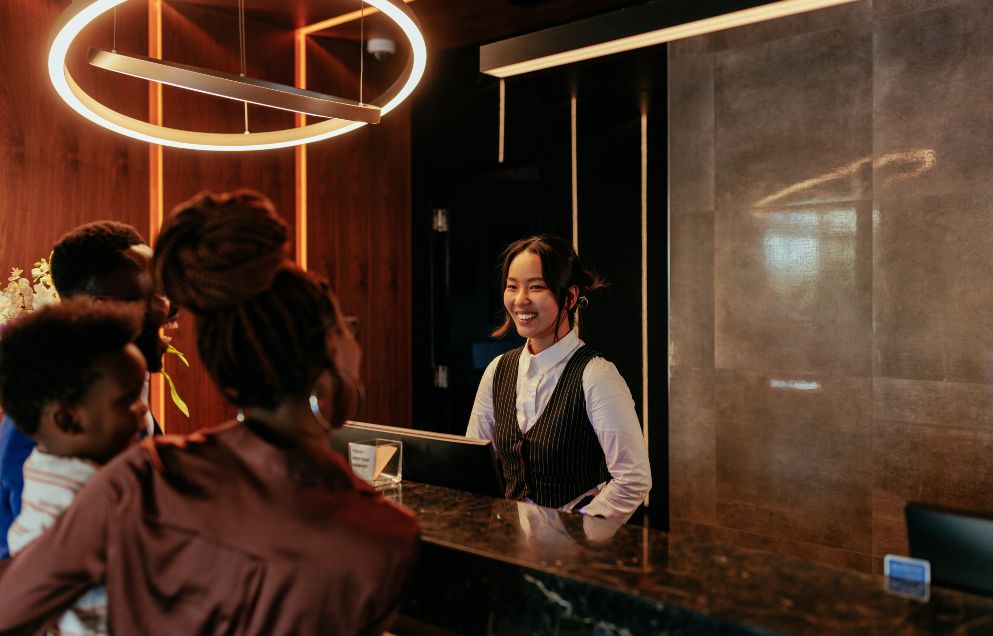
2025 in a nutshell: A year of challenges, creative solutions, and staying power
Despite everything, the sector successfully adapted. Many businesses strengthened their processes, invested in technology, and doubled down on staff development. Customers continued to look for experiences that felt meaningful and shareable, and operators found inventive ways to provide them. For a year that offered very little external support from sources beyond the sector itself, 2025 once again showed that hospitality’s resilience remains one of its defining strengths.
Your business is built on great service. Ours is too.
At Howden, we understand that hospitality is all about people - guests, staff, and the experience you deliver every day. Whether you run a restaurant, hotel, or bar, we provide handcrafted hospitality insurance designed to protect what matters most: your people, your income, and your reputation.
While we manage the risks, you can focus on what you do best, delivering memorable experiences to your customers.