 Austria
 Belgium
 Denmark
 Finland
 France
 Germany
 Greece
 Iceland
 Ireland
 Liechtenstein
 Netherlands
 Norway
 Poland
 Portugal
 Spain
Spain
 Sweden
 Switzerland
 Turkey
 United Kingdom
 Australia
 Fiji
Fiji
 Hong Kong
 India
India
 Indonesia
 Japan
Japan
 Malaysia
 New Zealand
 Philippines
 Singapore
 Thailand
 Brazil
 Chile
Chile
 Colombia
 Mexico
 Peru
Peru
 USA
USA
 Bahrain
 Israel
 Morocco
 Oman
Oman
 UAE
UAE
 Saudi Arabia
 Tanzania
Work or equipment element ? Rules for your professional installations

 Prefer us on Google


Technical equipment and ten-year warranty: a legal frontier to be clarified.
In the industrial and energy sectors, project owners, installers, and insurers are regularly faced with a crucial question : Are certain technical equipment, although intended exclusively for professional use, covered by the ten-year warranty ?
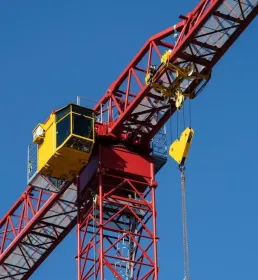
This question becomes particularly sensitive when it comes to complex installations, boilers, photovoltaic panels, and overhead cranes that are integrated into permanent structures.
The line between “equipment” and “structure” can seem blurred, and the legal consequences are significant: in the event of damage, whether or not Article 1792-7 of the Civil Code applies can determine who is responsible for repairs.
Can the ten-year warranty apply to professional technical equipment?
The decision Cass. 3rd civ., September 25, 2025, n° 23-18.563 Published in the Bulletin, confirms a well-established rule: as soon as an equipment is considered as a "work", it no longer falls under article 1792-7 of the Civil Code, even if it is used only in a professional setting.
In this case, the Court upheld the decision of the Court of Appeal, which had ruled that the renovation work on the refractory lining of a gas boiler, ovens, and ducts in an ammonia production unit constituted a construction project.
Why? Because the work involved heavy masonry techniques: demolition, bricklaying, anchoring, application of successive mortars...
The Court clearly stated that the nature of the work, and not their industrial use, is decisive. Once classified as a construction project, these works cannot be considered as mere equipment elements within the meaning of Article 1792-7.
It specifies: "Having determined that this work constituted, in itself, a structure within the meaning of Article 1792 of the Civil Code, the Court of Appeal correctly concluded that it did not fall within the scope of the equipment referred to in Article 1792-7 of the same code. " (Cass. 3rd civ., Sept. 25, 2025, No. 23-18.563, published in the Bulletin)
This decision reinforces a constant jurisprudence: the fact that a piece of equipment is exclusively professional is not enough to exclude the ten-year warranty. What matters is its material and functional integration into the construction, not its economic purpose.
A well-established case law: the recognized work, even in an industrial context.
This principle had already been established in a landmark decision of September 21, 2022 (Court of Cassation, 3rd Civil Chamber, No. 21-20.433) ). La Cour y avait jugé que des modules photovoltaïques intégrés à une toiture existante faisaient partie d’un ouvrage global, car ils assuraient le clos et le couvert du bâtiment.
She had therefore ruled out the qualification of elements of equipment exclusively for professional use (electricity production being intended for resale), recalling that the economic purpose does not condition the application of the ten-year guarantee.
Same reasoning in a decision of April 4, 2019 (Cass. 3rd civ., No. 18-11.021, published in the Bulletin), regarding a rolling path and a crane for metal coils. These elements have been considered as structures due to their attachment to the structure and their permanent purpose.
This position has been confirmed by several court of appeal decisions:
Rennes Court of Appeals, March 30, 2023, Case number 22/02266 : a photovoltaic installation integrated into the roof is a structure, as it plays a role in the structure and waterproofing.
CA Riom, July 4, 2023, Case number 17/00169 : same solution, as the panels are inseparable from the metal roofing.
Reims, February 28, 2023, No. 22/00566 : photovoltaic panels integrated into the roofing of an agricultural building are classified as a structure, as they contribute to the waterproofing and structure.
All these decisions converge towards a clear principle: as soon as an element is qualified as a work, it escapes the exclusion of Article 1792-7.
Professional destination: a criterion now without effect on the ten-year guarantee.
The decision of September 25, 2025 is therefore part of a coherent logic: the exclusively industrial destination of an installation (such as an ammonia unit, a power plant or a data center) is not a criterion for excluding the ten-year guarantee, as long as the work carried out constitutes a construction.
The Court thus neutralizes the restrictive scope of Article 1792-7 of the Civil Code, which only concerns detachable equipment elements intended exclusively for professional use, and not the works themselves.
In other words, as soon as there is work, there is no longer 1792-7.
This analysis applies to heavy industrial installations (refractory coatings, overhead cranes, pipelines, technical pathways) as well as integrated energy equipment (photovoltaics, structural heat pumps, thermal systems).
Need to know more?
Contact our Director of Construction & Energy
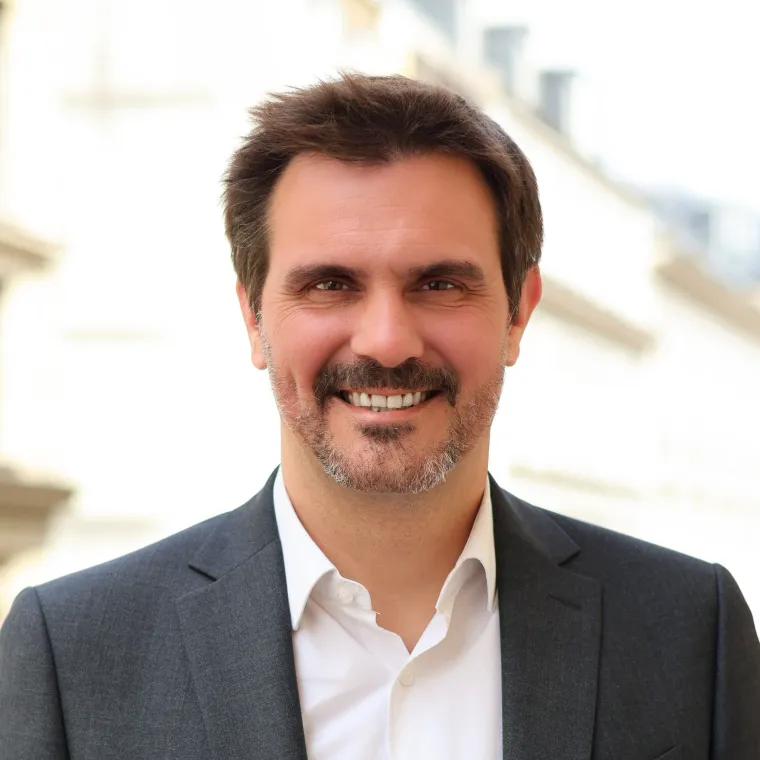 Head of Construction & EnergyHead of Construction & Energy
With nearly 20 years of experience in construction insurance, Raphaël has held increasingly responsible positions at Bouygues Construction, Marsh, and Satec where he was head of Construction and Real Estate. He now joins Howden France to lead the development of the Construction and Energy Product Line on an international scale. Recognized for his negotiation skills and strategic vision, Raphaël will contribute to positioning Howden France as a leading player in the construction and energy insurance market.
Specific expertise: Decennial, Waterproofness, Real Estate, Large Projects
Degrees:
- MASTER Degree IAP / La Sorbonne
- MASTER Degree Insurance Law / La Sorbonne
- Executive MBA / PSL Paris Dauphine
- Executive MBA / UQAM Montreal