 Austria
 Belgium
 Denmark
 Finland
 France
 Germany
 Greece
 Iceland
 Ireland
 Liechtenstein
 Netherlands
 Norway
 Poland
 Portugal
 Spain
Spain
 Sweden
 Switzerland
 Turkey
 United Kingdom
 Australia
 Fiji
Fiji
 Hong Kong
 India
India
 Indonesia
 Japan
Japan
 Malaysia
 New Zealand
 Philippines
 Singapore
 Thailand
 Brazil
 Chile
Chile
 Colombia
 Mexico
 Peru
Peru
 USA
USA
 Bahrain
 Israel
 Morocco
 Oman
Oman
 UAE
UAE
 Saudi Arabia
 Tanzania
Construction machinery: where does operational liability end and third-party liability begin?
 Prefer us on Google


The distinction between Civil Liability for Traffic and Civil Liability for Operations has long been a sensitive issue for companies using construction machinery. A progressive jurisprudential evolution, notably confirmed by a decision of the Court of Cassation on November 9, 2023, now leads to questioning certain certainties regarding insurance coverage.
An increasingly blurred line between the function of circulation and the function of a tool
Traditionally, the distribution of guarantees was based on a relatively clear distinction:
- Third Party Liability (TPL) insurance, mandatory for all motor vehicles, covers damages related to its use as a vehicle;
- Operating Liability (OL), or General Liability, intervenes for damages caused in the context of professional activity when the vehicle is used as a work tool.
This reading generally led to considering that a vehicle used for earthmoving, lifting, or drilling operations mainly fell under Operating Liability. However, several court decisions have gradually expanded the scope of mandatory automobile insurance, even when the vehicle is not used for transportation purposes.
A well-established jurisprudential trend now
For several years, the Court of Cassation has taken an extensive approach to the concept of "use" of a motor vehicle.
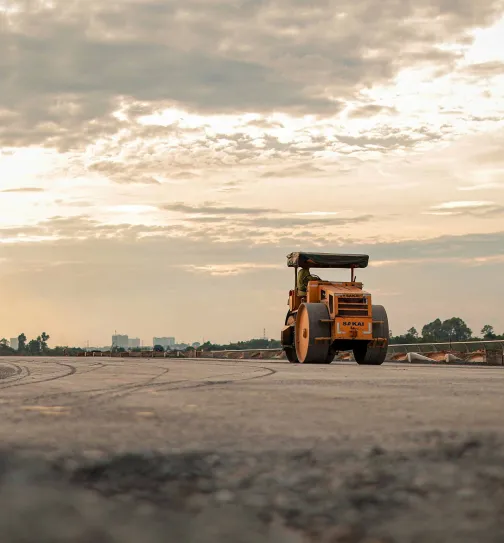
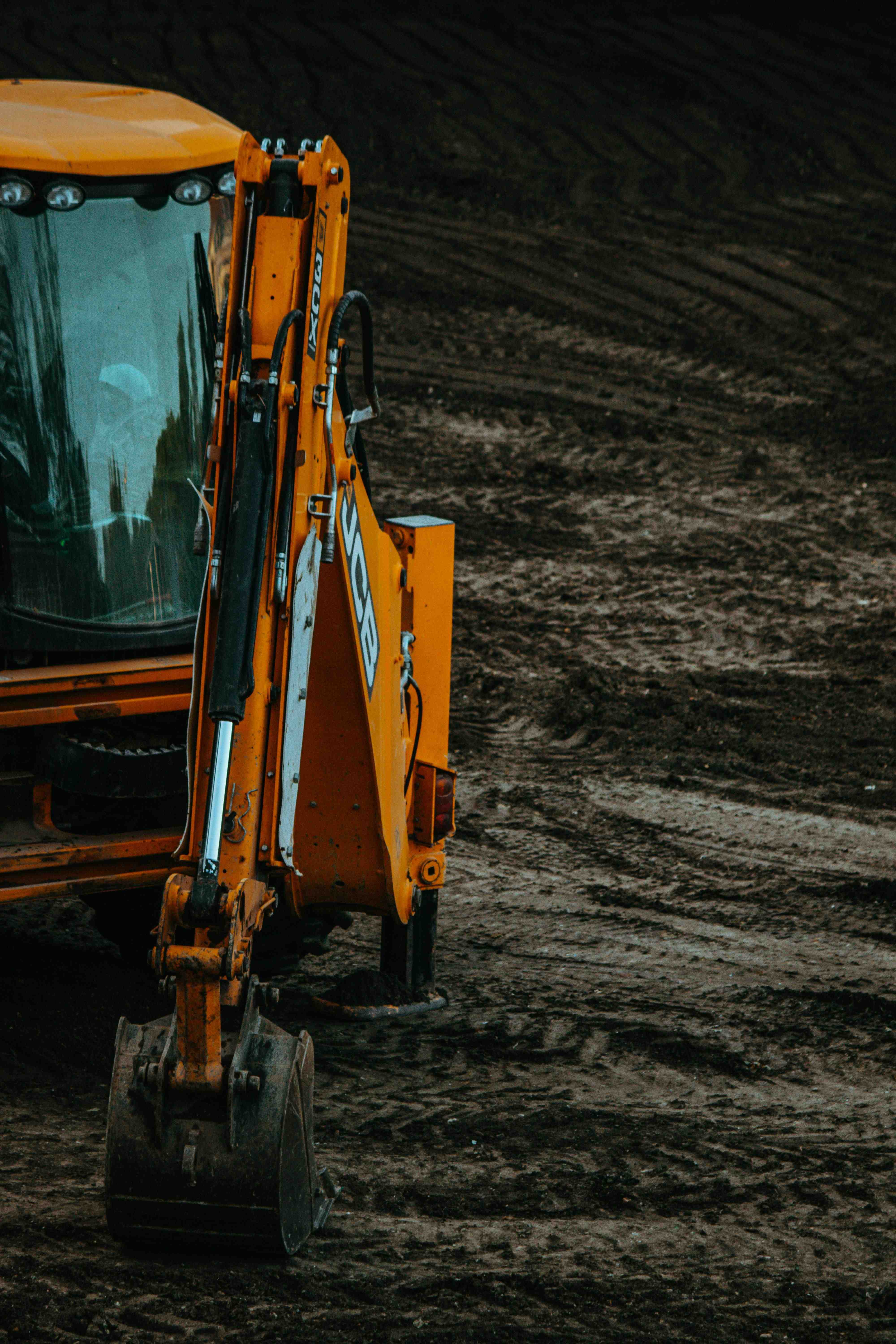
After several decisions rendered in 2013 and then in 2018, the ruling of November 9, 2023 marks an important step. In this case, an excavator used to dig a trench severed an underground pipe, causing a water leak. Although the machine was used as a tool for work and not as a means of transportation, the Court considered that the damage fell within the scope of compulsory motor insurance.
This decision confirms a fundamental trend: the qualification of the mobilizable contract no longer depends solely on the distinction between "vehicle in circulation" and "tool vehicle".
Damages caused by the use of the machine itself, its accessories, or its equipment can now fall under the compulsory motor insurance regime, even on a construction site closed to the public.
Concrete impacts for corporate insurance programs
For large groups in the construction, industry, logistics, or equipment rental sectors, the issue goes far beyond legal debate. Identifying the guarantee to be called upon can have direct consequences on:
- the mobilizable compensation ceilings;
- the applicable deductibles;
- the management of recourse between insurers;
- the articulation between Fleet Automobile, General Liability and, if applicable, international programs;
- the allocation of responsibilities between owners, lessors, tenants, and subcontractors.
In accidents involving high-value equipment or occurring at sensitive sites, a poor assessment of the risk can also create uncertainties about the scope of coverage and slow down the settlement of claims.
Beyond the distinction between Liability Insurance for Vehicles and Liability Insurance for Operations, it is the consistency of coverage that secures the compensation for claims.
Areas of vigilance to strengthen
This evolution invites companies to pay particular attention to several subjects:
- the coherence between Fleet Automobile and General Liability guarantees;
- the respective exclusions of the different contracts;
- situations of overlap or, conversely, gaps in coverage;
- contractual responsibilities between clients, user companies, lessors, and subcontractors;
- the adequacy of insurance programs to the evolution of case law.
A comprehensive approach to risk is more necessary than ever.
Beyond the distinction between RC Circulation and RC Exploitation, this evolution illustrates the need to understand the risks related to construction machinery in a global logic. For companies with large equipment fleets or involved in high-stakes operations, a regular review of contracts, their articulation, and potential loss scenarios is now essential. The goal is not only to determine which insurer will intervene tomorrow, but to secure the entire insurance program to avoid any uncertainty in the event of a major loss.