 Austria
 Belgium
 Denmark
 Finland
 France
 Germany
 Greece
 Iceland
 Ireland
 Liechtenstein
 Netherlands
 Norway
 Poland
 Portugal
 Spain
Spain
 Sweden
 Switzerland
 Turkey
 United Kingdom
 Australia
 Fiji
Fiji
 Hong Kong
 India
India
 Indonesia
 Japan
Japan
 Malaysia
 New Zealand
 Philippines
 Singapore
 Thailand
 Brazil
 Chile
Chile
 Colombia
 Mexico
 Peru
Peru
 USA
USA
 Bahrain
 Israel
 Morocco
 Oman
Oman
 UAE
UAE
 Saudi Arabia
 Tanzania
 Prefer us on Google


What is meant by "existing work"?
The work on existing structures consists of a builder intervening on an asset belonging to a third party, most often the owner of the project. These works are very sensitive in terms of stakes because the risk of damage to existing assets can be very high, for example in case of fire. This is why it is crucial to understand how insurance can intervene and what its limits are.
Limits of coverage for "All Risks Construction" in the event of serious losses
During construction work, there are many risks: collapse of a supporting structure or fire, for example. In recent years, several emblematic disasters have resulted in financial stakes of several tens of millions of euros.
When a company causes damage to existing property, it is a property belonging to a third party. Its liability is then covered by its "operational civil liability" insurance policy, the amounts of which must be verified in relation to the risks involved.
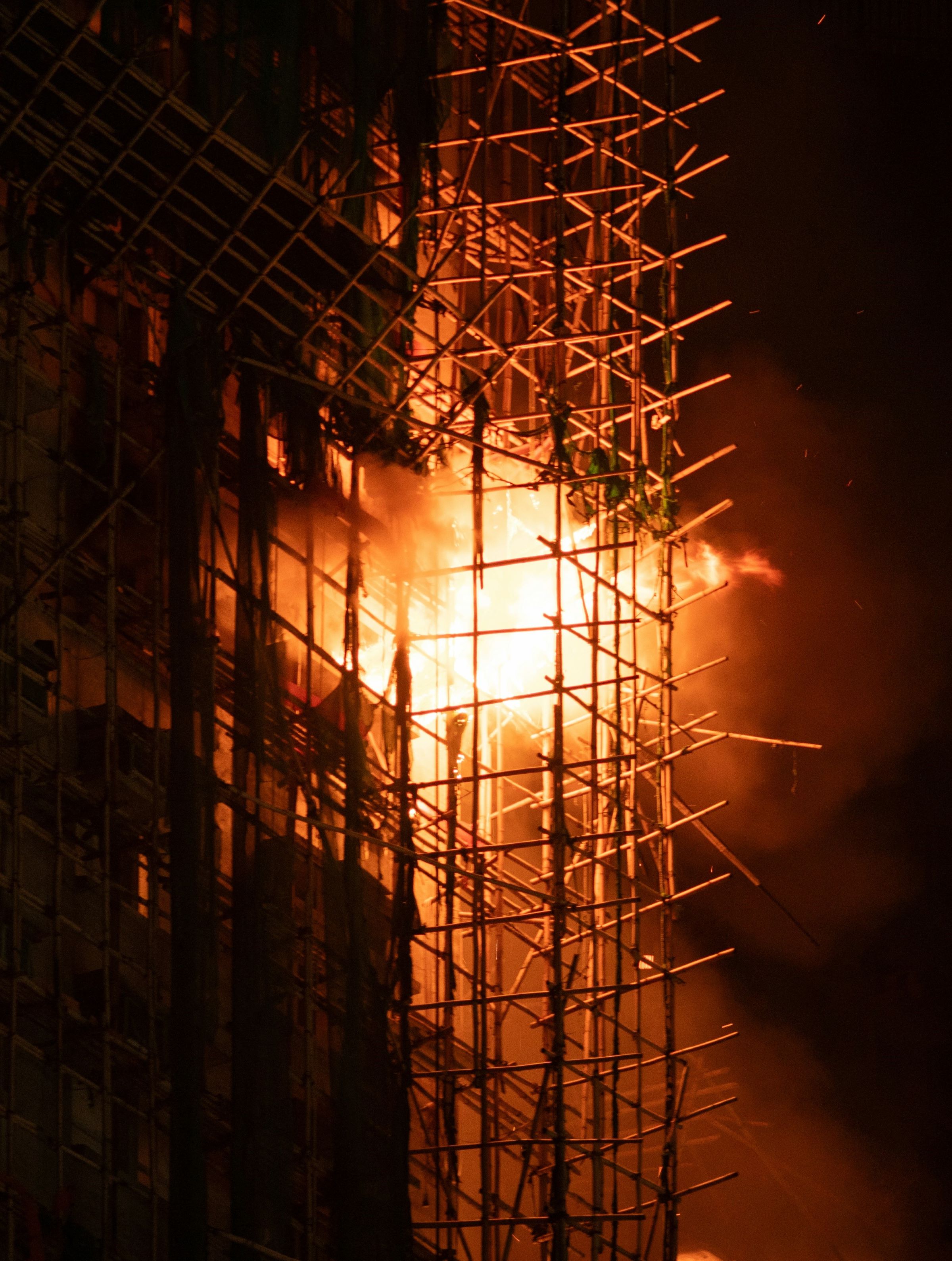
Concrete cases of fires occurring shortly before the handover, with significant destruction of the structure, show that repair costs can far exceed the current guarantees of medium-sized companies. This is therefore a real issue of protecting the balance sheet.
The developers can take out "All Risks Construction" policies with an extension for "damage to existing property". However, this extension is limited (for example, 20% of the value of the new works) and generally excludes fire. Therefore, it does not provide a protective solution in the event of a major loss.
Waiver of recourse: a response to the limits of TRC ?
Shouldn't the "all-risk" insurer covering the fire risk on existing buildings waive recourse against companies beyond their insurance limits?
This approach must be integrated from the negotiation phase - upstream - with the client, emphasizing that it is the most effective way to ensure the proper implementation of compensation.
Should we ask the client to waive their right to recourse themselves ?
This option can be considered, provided that the client obtains approval from their insurers.
This can address the issue of material damages but not that of immaterial damages. One will mention a fire on a prestigious hotel project that experiences a fire at the beginning of the renovation work, which in turn leads to a one-year delay in the planned opening and therefore a claim for financial losses.
If the client subscribes to guarantees such as advance loss that can cover these damages, this is not common (budget) and it is necessary to verify if the insurer waives recourse against the builders because only the client is insured.
Work on existing state-owned assets: insurance issues and limitations
A very specific case is intervention on state-owned buildings. The latter being its own insurer, and not waiving recourse: companies are exposed to very high risks in terms of reconstruction value (former historical buildings). There is no “miracle” solution because the insured amounts will in any case be insufficient. It is incumbent upon companies to demonstrate to the state that the imbalance between the amount of the contract and the level of risk is too significant. It would therefore be relevant to consider limiting or eliminating recourse against builders beyond a certain threshold.
At Howden, we have already initiated discussions with state representatives, which has helped to advance understanding of the issues at stake.
After reception, the work can still cause damage to the existing property in case of a defect that would have an impact, it will then be necessary to distinguish under the ten-year civil liability regime the existing "divisible" from the "indivisible" ones with a volatile jurisprudence.


More than ever, the role of insurance advice is to enlighten builders and help them implement protective solutions either through insurance transfer or through appropriate contractual engineering.