
 Austria
 Belgium
 Denmark
 Estonia
 Finland
 France
 Germany
 Greece
 Iceland
 Ireland
 Italy
 Liechtenstein
 Netherlands
 Norway
 Poland
 Portugal
 Spain
 Sweden
 Switzerland
 Turkey
 United Kingdom
 Australia
 Fiji
 Hong Kong
 India
 New Zealand
 Indonesia
 Japan
 Malaysia
 Philippines
 Singapore
 Thailand
 Brazil
 Chile
 Colombia
 Mexico
 USA
 Bahrain
 Israel
 Morocco
 Oman
 Saudi Arabia
 UAE
 Tanzania
World Mental Health Day 2026
 Prefer us on Google


Employee Mental Wellbeing Is More Than a Benefit — It Is an Investment in Productivity and Business Sustainability
Better Employee Wellbeing, Better Business Performance.
Every year on 10 October, World Mental Health Day highlights the importance of mental health awareness and access to appropriate care. In 2026, the theme “Lived Experiences Heard: Real Voices, Real Change” emphasises the importance of incorporating the experiences of people affected by mental health challenges into meaningful support and solutions. [1]
Over recent years, mental health has become an increasingly important issue worldwide, including in Thailand, particularly given its impact on the wellbeing of working-age populations who play a vital role in business and economic development.
Mental Health in Thailand: A Growing Concern
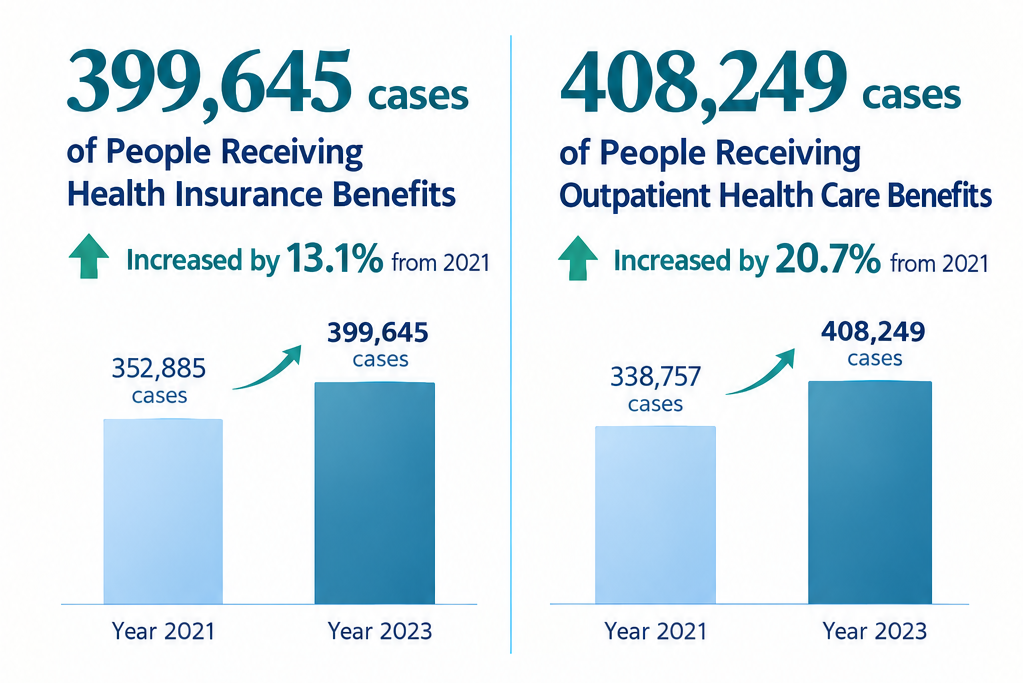
According to Thailand's National Statistical Office, based on data from the Department of Mental Health, Ministry of Public Health, the number of recorded patients with mental health conditions increased between 2021 and 2023.
In 2023, Thailand recorded:
• 399,645 patients with depression, an increase of approximately 13.1% compared with 2021.
• 408,249 patients with anxiety disorders, an increase of approximately 20.7% compared with 2021. [2]
These figures indicate an increase in recorded patients, although they do not necessarily reflect an equivalent rise in population-wide prevalence, as healthcare accessibility, diagnosis, and reporting practices may also influence the numbers.
Meanwhile, suicide mortality remains an important public health indicator, although suicide is influenced by multiple factors and cannot be attributed to a single cause.
These statistics raise an important question: Beyond the healthcare system, what role can employers play in supporting employee mental wellbeing?

We Spend One-Third of Our Day Working. How Does the Workplace Affect Our Mental Health?
For employees working eight hours a day, approximately one-third of each day is spent at work.
The workplace is therefore more than a place to deliver results. It is also an environment that influences stress levels, interpersonal relationships, and psychological wellbeing.
Thailand's Department of Health, Ministry of Public Health, identifies four common factors contributing to workplace stress: [3]
1. Excessive expectations and perfectionism.
2. Interpersonal conflict or difficulties with colleagues.
3. Perceived unfairness within the organisation.
4. Excessive workloads and responsibilities.
These challenges can arise in any workplace and cannot be resolved through occasional wellness activities alone.
Promoting mental wellbeing must begin with organisational culture, including setting realistic expectations, treating colleagues with respect through both words and actions, distributing workloads appropriately, and fostering fairness and trust.
Workplace stress does not affect only how employees feel. It may also influence concentration, motivation, productivity, and an organisation's ability to retain talent.
Employee Wellbeing: From Quality of Life to Productivity and Business Performance
Interestingly, creating a workplace environment that supports employee wellbeing does not benefit employees alone. Research has also demonstrated meaningful links between employee wellbeing, productivity, and business performance.
Research 1: Employee Happiness & Productivity — University of Oxford / Management Science (2023)
Bellet, De Neve, and Ward examined 1,793 British Telecom employees in the United Kingdom over six months, linking employee happiness levels with actual operational performance data. [4]
The study found that:
A one-point increase in employee happiness on a 0–10 scale was associated with approximately 12% higher productivity, measured through sales performance.
A particular strength of this research is its use of actual employee performance data rather than relying solely on employee perceptions, alongside a research design intended to investigate causal relationships.
Although the findings relate specifically to call centre operations and should not be applied universally to all organisations, they provide valuable evidence that employee happiness can influence measurable workplace performance.
Research 2: Workplace Wellbeing & Firm Performance — Oxford Wellbeing Research Centre
De Neve, Kaats, and Ward analysed approximately one million employee survey responses across 1,782 publicly listed US companies, examining four dimensions of workplace wellbeing: [5]
• Happiness
• Job Satisfaction
• Sense of Purpose
• Stress
The research found that companies reporting stronger employee wellbeing tended to achieve better financial performance and higher company valuations. Wellbeing indicators were also associated with future business performance.
However, as this was an observational study, the findings do not establish that improving employee wellbeing alone will automatically increase profitability.
Additionally, a large-scale analysis by Krekel, Ward, and De Neve reviewed 339 independent studies covering approximately 1.88 million employees. The findings indicated positive associations between employee satisfaction, productivity, customer loyalty, and profitability, alongside lower employee turnover. [6]

Together, these findings suggest that Employee Wellbeing should not be viewed merely as an HR initiative, but as an important component of people strategy and overall business performance.
From Awareness to Action: What Can Employers Do?
Supporting mental health should not be limited to World Mental Health Day activities. It should form part of a long-term approach embedded in everyday organisational practices.
Beyond building a healthy workplace culture, Employee Benefits can play an important role in improving access to mental healthcare and support.
Organisations can begin by reviewing four key areas:
1. Group Insurance & Mental Health Coverage
Review existing group medical insurance to assess whether mental healthcare is adequately covered, including psychiatric consultations, mental health treatments, and psychological services, subject to policy terms, exclusions, and limitations.
2. Employee Assistance Program (EAP)
Consider introducing confidential counselling and support services for employees experiencing stress, mental health concerns, or personal difficulties, helping them access professional assistance at an early stage.
3. Employee Benefits Communication & Awareness
Even well-designed benefits may be underutilised if employees do not understand their entitlements or how to access available services.
Clear and consistent communication is essential to improve awareness, reduce stigma associated with mental healthcare, and encourage appropriate benefits utilisation.
4. Sustainable Benefits Design & Cost Management
Expanding mental health benefits does not necessarily require unlimited expenditure. Organisations can design appropriate coverage based on employee needs, utilisation data, provider options, and available budgets.
Effective employee benefits are not necessarily those offering the highest coverage, but those that address employees' needs, remain accessible, and deliver sustainable value to the organisation.

Howden Thailand: Better Wellbeing Through Smarter Employee Benefits Design
At Howden Thailand, we believe that effective employee benefits should create meaningful value for both employees and employers.
Our Employee Benefits team supports organisations in reviewing group insurance programmes, evaluating mental health coverage options, exploring Employee Assistance Program (EAP) solutions, and designing sustainable benefits structures aligned with workforce needs and business objectives.

Because investing in employee mental wellbeing is not only about improving quality of life. It is also about building a capable, resilient workforce and a more sustainable organisation. For organisations interested in reviewing or enhancing their Employee Benefits programmes, particularly mental health coverage and Employee Wellbeing Solutions, please feel free to reach out.