
 Austria
 Belgium
 Denmark
 Estonia
 Finland
 France
 Germany
 Greece
 Iceland
 Ireland
 Italy
Italy
 Liechtenstein
 Netherlands
 Norway
 Poland
 Portugal
 Spain
Spain
 Sweden
 Switzerland
 Turkey
 United Kingdom
 Australia
 Fiji
Fiji
 Hong Kong
 India
India
 New Zealand
 Indonesia
 Japan
Japan
 Malaysia
 Philippines
 Singapore
 Thailand
 Brazil
 Chile
Chile
 Colombia
 Mexico
 USA
USA
 Bahrain
 Israel
 Morocco
 Oman
Oman
 Saudi Arabia
 UAE
UAE
 Tanzania
Updated Thai Compulsory Motor Insurance (CTPL) Regulations 2026
 Prefer us on Google


The Office of Insurance Commission (OIC) has issued Registrar Orders No. 16/2569 and 17/2569, dated 7 August 2026, introducing important changes to the Compulsory Motor Insurance Policy (CTPL) (Personal Injury Protection Insurance or “Por Ror Bor”). These changes focus on policy cancellation requirements and policy period flexibility, ensuring better compliance and protection for vehicle owners.
1. Cancellation of Compulsory Motor Insurance Policies
Under the new regulations, insured persons may cancel a CTPL policy only under specific circumstances and supporting evidence must be provided.
A policy cancellation request can be made if:
• There is legal evidence showing that the vehicle has been permanently deregistered or taken out of use; or
• There is evidence confirming that the same vehicle has been insured under more than one CTPL policy, resulting in duplicate coverage.
Therefore, policyholders can no longer cancel a CTPL policy without a valid reason. Any cancellation request must comply with the conditions prescribed by law and be supported by the required documentation.
For insurance companies, policy termination can only be carried out in accordance with applicable legal provisions and regulatory requirements.
2. Flexible Insurance Policy Periods
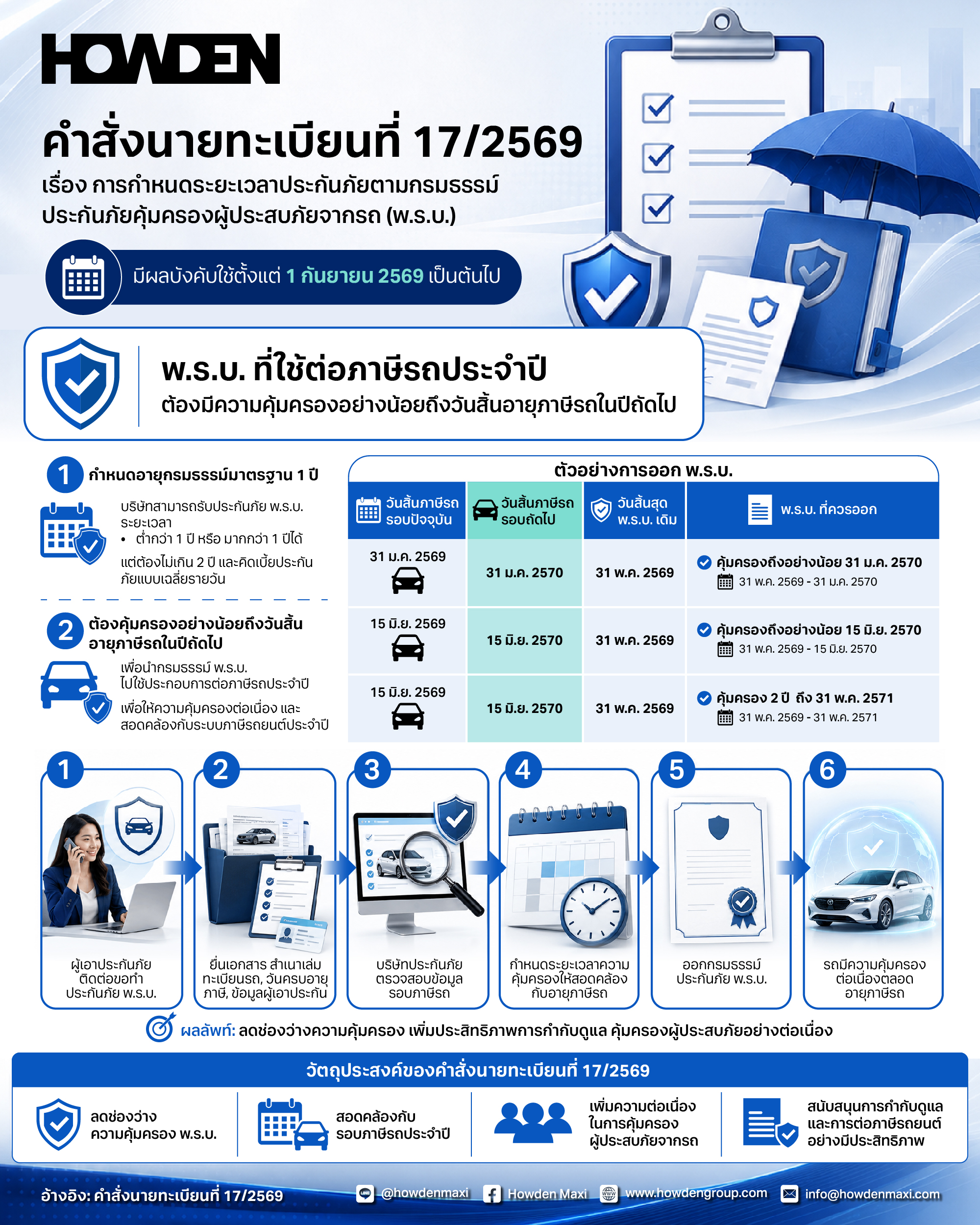
Traditionally, a CTPL policy provides coverage for a period of one year. However, under the new regulations, policyholders now have greater flexibility in selecting the insurance period based on their specific needs.
The coverage period may be:
• Less than one year; or
• More than one year, but not exceeding two years.
In such cases, the insurance premium will be calculated on a Daily Pro-rata Basis, ensuring that policyholders pay premiums corresponding to the actual coverage period selected.
Important Consideration for Annual Vehicle Tax Renewal
Vehicle owners should note that when a CTPL policy is used as supporting documentation for annual vehicle tax renewal, the insurance coverage must remain valid at least until the vehicle tax expiration date in the following year.
As a result, motorists who choose a short-term CTPL policy should carefully verify that the policy period satisfies the requirements for annual vehicle tax registration and renewal.
Effective Date
The new provisions regarding policy duration will become effective on 1 September 2026 onwards.
Vehicle owners, insurance intermediaries, and all parties involved in motor insurance are encouraged to familiarize themselves with these regulatory
Conclusion
The latest amendments to the Compulsory Motor Insurance regulations aim to provide greater clarity regarding policy cancellations while offering increased flexibility in determining coverage periods. Although these changes benefit policyholders by providing more options, it remains essential to understand the applicable conditions, particularly when arranging CTPL coverage for annual tax renewal purposes.
For further advice on CTPL insurance, vehicle tax renewal requirements, or selecting the most suitable insurance coverage, consult a licensed insurance broker or insurance professional to ensure full compliance and appropriate protection.