


 Austria
 Belgium
 Denmark
 Estonia
 Finland
 France
 Germany
 Greece
 Iceland
 Ireland
 Italy
Italy
 Liechtenstein
 Netherland
 Norway
 Poland
 Portugal
 Spain
Spain
 Sweden
 Switzerland
 Turkey
 United Kingdom
 Australia
 Hong Kong
 New Zealand
 India
India
 Indonesia
 Japan
Japan
 Malaysia
 Philippines
 Singapore
 Thailand
 Brazil
 Chile
Chile
 Colombia
 Mexico
 Peru
Peru
 USA
USA
 Bahrain
 Israel
 Morocco
 Oman
Oman
 UAE
UAE
 Saudi Arabia
 Tanzania
What does a good fire risk assessment look like?
What is a Fire Risk Assessment (FRA)?
Fire risk assessments are one of the documents that any building owner is required to have. For any organisation, not only is it a legal responsibility, but it may also save the lives of your employees and users.
A fire risk assessment (FRA) is a holistic review of the whole premises – including construction (internal and external) and whether any defects endanger life or compromise safety from a potential or actual fire.
What should an assessment cover?
An FRA should encompass the following:
- Internal and external construction methods, and whether there are any concerns as to the breaches, lack of compartmentation, or rapid spread of fire
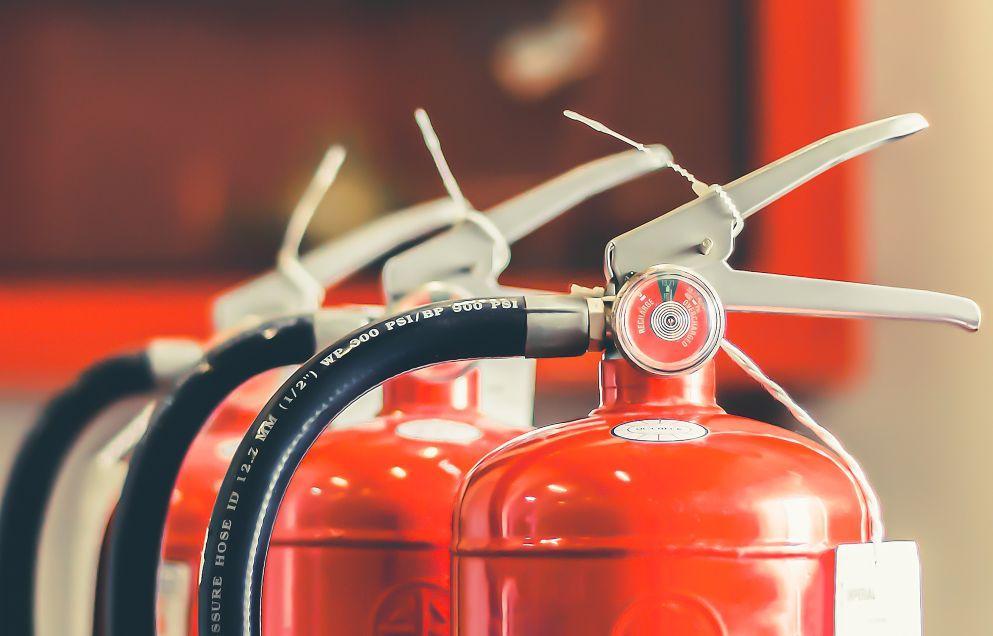
- Whether inspections (fire alarm testing etc) and maintenance measures (fire extinguishers etc) are in place and whether any recommended remedial items highlighted have been completed
- The days and hours the premises are occupied and whether this changes the risk profile for those working during evenings and weekends (i.e. there are fewer persons to assist with an evacuation, and whether the emergency lighting is suitable, etc)
- Discuss fire measures and whether any further steps are required to reduce risk, including active fire alarms and fire doors
- Fire alarm detection and whether it’s currently sufficient or needs to be enhanced to provide early warning for occupants to escape
- What training is in place, is it up to date, and is it suitable for the type of premises in question?
- Establish whether hybrid/temp/contract workers, volunteers, beneficiaries, or visitors who aren’t always in the property are aware of emergency exits and procedures, how quickly employees or volunteers evacuate, and whether any lessons are learned
- Determine whether emerging technologies or those that are likely to increase the risk of a fire (such as solar panels, electrical vehicle charging points, e-bikes/scooters etc) are used and what steps are in place to reduce a fire from starting
- If relevant, in case of an emergency or evacuation, is there co-ordination amongst multiple users and occupiers at a premises?
- There should be an overall risk rating of the premises, as it currently stands, and where the organisation should be aiming towards – which is a tolerable risk from fire as a hazard
Organisations should expect some gaps to be picked up in assessments, and recommendations for improvements made. Assessments aren’t just undertaken to find fault, but it’s unlikely for any organisation to come away with zero actions needed.
Remember, an FRA focuses on life safety, i.e. making sure that all reasonable steps are taken to reduce the risk of a fire starting/spreading, and in the event that it does, occupants can escape or move away from fire and smoke. It may be that following an FRA, simple premises don’t need to have fire detection systems or emergency lighting installed, but for complex and extensive premises, these systems are likely to be needed.
FRAs can also focus on property protection. However, as properties are insured, the focus should always be on preventing the endangerment of life. Of course, there are advantages to both organisations and insurers for reducing risk, but both should primarily direct their efforts towards protecting and preserving life.
Who is responsible for assessments?
In England and Wales, the ‘responsible person’ (known in Scotland as the ‘duty holder’ and in Northern Ireland as the ‘accountable person’) is responsible for ensuring regular fire risk assessments have been conducted on premises that they are in control of, and the actions recommended are understood and implemented as far as is reasonably practicable.
Who are these responsible people?
Responsible persons are employers and those who are in control of premises. Typically, responsible persons are organisations such as corporate bodies (i.e. the employer), but they can also be named persons, such as the chair of governors/trustees, chief executive officer, or whoever sits at the top of the organisational or business hierarchy that is likely to be viewed as the driving force.
These responsible people must be aware of the legal duties placed upon them and that, ultimately, they’re the ones legally responsible for ensuring that fires do not occur in premises they control. And of course, they need to recognise they may face legal proceedings if deemed to be in breach of relevant legislation.
Day-to-day responsibility for managing fire safety on behalf of the responsible person isn’t the same as the accountability that a responsible person holds. Responsible persons can delegate responsibility for ensuring the fire safety of others. However, they cannot delegate their legal responsibilities to others.
How do you pick a suitable assessor?
We’d recommend that you use an assessor who is a member of a fire industry body (such as the IFSM, IFPO or IFE) and holds third-party accreditation for undertaking assessments. That way you can gain assurance that the assessor has taken steps to demonstrate they’re competent.
Bear in mind, an assessor may be competent to assess a simple single-storey small office, but these properties are quite different to complex care homes with residents who are asleep on the premises; could be receiving oxygen therapy; may be non-ambulant; who are under the influence of medications; or have health conditions such as dementia, relying on others for support. Therefore, having assessors who’ve been assessed in different tranches relevant to different risks (from high risk to low risk) is a good way for you to be satisfied that you’re getting a competent assessor suitable for your property who will provide you with a relevant and sufficient report. The National Fire Chiefs Council (NFCC) has some good advice here on how you can choose a suitable assessor.
How to brief an assessor
The business or premises being assessed needs to agree with the assessor on a scope of work before the assessment takes place. You must identify at the outset what is in and out of the scope of the assessment. You’ll need to be aware of where access is required and what information must be provided. In residential premises nowadays, it won’t be sufficient to provide an assessment of the common areas only. Therefore, assessors must have access to a sample (generally 10 to 20 per cent) of living accommodation to provide a holistic and fair assessment of risk.
What needs to be done to prepare
In short, you don’t know what you don’t know! Which is why an assessment will help ensure that you’re meeting your legal duties.
To prepare, we’d recommend that you ask your assessor to provide a pre-visit list of what’s likely to be needed for the assessment to take place. The assessor will require access to all areas to complete a suitable and sufficient assessment of the premises – so, you’ll need to have keys, electronic access cards, or codes ready to open any locked rooms and hatches.
If you have premises where residents live, notify each of them as the assessor will need to sample several residential areas to build a holistic picture. Assessors also need access to roof voids, cupboards, and plant rooms, and may need access to tenanted areas. And of course, make sure all your paperwork that relates to inspections, plus testing and maintenance for fire safety, is to hand.
Top tips on what a good FRA looks like
- Jargon- free: It’s tempting for experts to use technical jargon, rather than simple words. Those receiving and reading assessments are often unfamiliar with the specialist terminology and need to understand exactly what an assessor is reporting.
- The good and bad: An assessment shouldn’t just be a list of what is wrong with a property. There should also be commentary on what the organisation is doing well and how they can improve that standard (if any). Those being assessed want to know that they’re meeting their legal duties and therefore confirmation that they’re taking positive steps in the right direction.
- Visual understanding: Remember, FRAs aren’t just read by the organisation or responsible person. Insurers (and brokers) amongst other people may read the assessment. Having a detailed description of the premises provides these readers with a visual walkthrough of what the premises and its surroundings consist of is really useful. A thorough assessment also contains photos of the good, the bad, and even the ugly. The adage “a picture paints a thousand words” helps to convey an assessment outcome to others – particularly if they haven’t been to the premises.
- An eye for detail: A decent FRA report has sufficient commentary to allow the responsible person to understand their premises. Good assessments will thoroughly review records of maintenance and inspection and determine whether further work or action is required from these.
- Pragmatic: Good assessors are pragmatic but should not be seen as compliance checkers. If something is slightly out of guidance/best practice, this may be acceptable. As an example, if a fire door has a gap at the side of 5mm rather than the standard 4mm, then this may not cause a large issue. A door that has larger gaps (depending on the premises) is likely to create an area of concern.
- It’s not opinion-based: Good assessments refer to published guidance which informs the receiver as to whether they are meeting their legal obligations.
- Assumptions: Good assessments don’t make assumptions. Either something is or isn’t in place. Organisations expect thorough work to be undertaken, and decent assessors will provide a thorough review.
- A very clear action plan: Similar to the above, responsible persons and their employees need to know what to do post-FRA. Assessments should be written with a ‘must do’, ‘should do’, and ‘could do’ approach in mind. Not everything is a legal requirement and therefore assessors – particularly those giving assessments in the third sector – need to bear in mind budgets are stretched. Often, it’s a case that assessors can find low-cost resolutions to achieving legal compliance.
- Action dates need to have reasonable deadlines: Telling someone to undertake fixed wire testing (known as Electrical Installation Condition Reporting (EICR)) within a week is not reasonable. The process can be started, but completion is likely to take several months due to sourcing reputable suppliers, receiving quotations, commissioning the successful electrical contractor, and then receiving the final documentation. So reasonable deadlines must be set.
A good assessment/assessor will also check in with the organisation to determine whether you’ve followed their advice and whether you need anything further clarified.
If you’d like to speak with a member of Howden’s specialist Risk Management team today, email us at [email protected] or find more infomration here.