


 Austria
 Belgium
 Denmark
 Estonia
 Finland
 France
 Germany
 Greece
 Iceland
 Ireland
 Italy
Italy
 Liechtenstein
 Netherland
 Norway
 Poland
 Portugal
 Spain
Spain
 Sweden
 Switzerland
 Turkey
 United Kingdom
 Australia
 Fiji
Fiji
 Hong Kong
 India
India
 New Zealand
 Indonesia
 Japan
Japan
 Malaysia
 Philippines
 Singapore
 Thailand
 Brazil
 Chile
Chile
 Colombia
 Mexico
 Peru
Peru
 USA
USA
 Bahrain
 Israel
 Morocco
 Oman
Oman
 UAE
UAE
 Saudi Arabia
 Tanzania
Can predictive maintenance cut unplanned downtime?
Written by Matt Parry – Manufacturing Account Executive.
Unplanned downtime caused by equipment failure represents a huge cost for manufacturers - and it happens all the time.
In a recent survey, electronic test tools and software firm Fluke found that more than six in ten manufacturers suffered unplanned downtime in the past year, costing the sector up to $852 million every week.
Nearly half of manufacturers in the US, Germany and the UK report between six and ten downtime incidents per week, while for almost one in five the figure's between 11 and 20.
Most of these outages last up to 12 hours, while 15 per cent report incidents stretching to 72 hours. And at an average cost of $1.7 million per hour, a single incident can equal up to $42.6 million in losses.
“The data shows us that downtime can’t be viewed just as operational problem anymore. It’s a real risk to competitiveness and enterprise value," says Fluke group president Parker Burke.
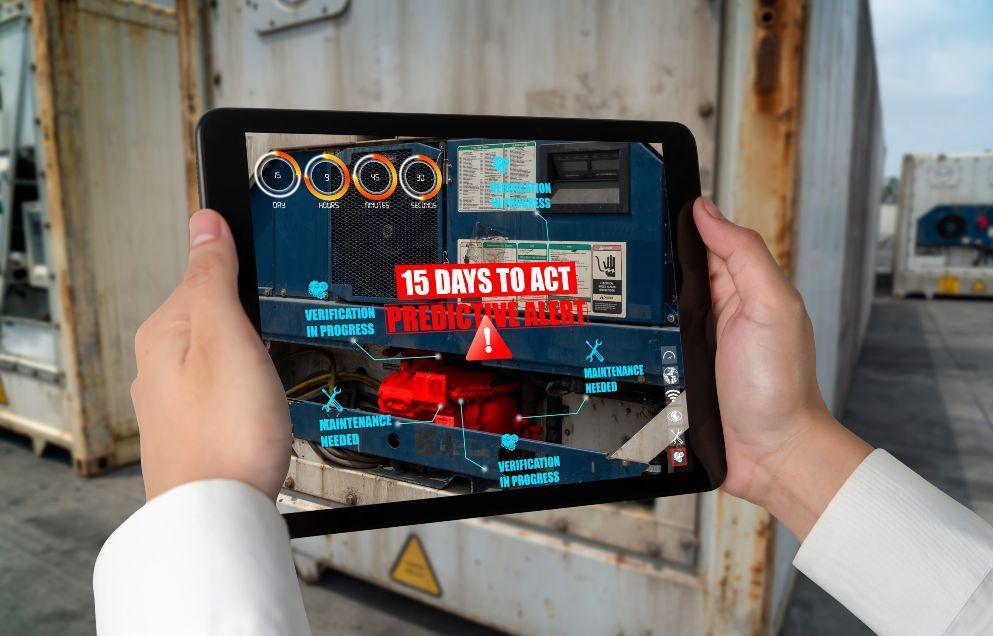
Unplanned downtime can be particularly costly in sectors such as the automotive industry, where tightly-controlled production schedules mean that even minor disruptions can have a significant impact. Meanwhile, industries subject to strict regulatory and compliance procedures can see incidents take longer to fix.
The worst way to deal with unplanned downtime is probably to take a purely reactive approach, dealing with issues only after they have happened. More effectively, most manufacturers use a preventative maintenance approach, with a regular schedule for servicing and equipment calibration.
This strategy, though, has its own costs, with components being replaced before they've actually failed, and downtime - albeit planned - incurred every time new parts are swapped in or equipment serviced.
While it may initially sound like the same thing, preventative maintenance involves a different approach. Increasingly, manufacturers are using data proactively as a method of avoiding unplanned downtime.
“As the world has become more reliant on machines, we’ve seen a widening gap in asset efficiency awareness that’s historically gone largely unnoticed,” says Mark Homer, vice president, global customer transformation for ServiceMax, from GE Digital.
"In the same way field service management solutions moved from being reactive to proactive to preventative, we are seeing a similar shift in attitudes to unplanned downtime from recovery to protection to pre-emptive. Over time, zero tolerance and zero unplanned downtime will become the norm as companies develop and invest in their industrial digital strategies.”
Put simply, predictive maintenance is the use of real-time sensor data - the so-called Internet of Things (IoT) - and analytics to anticipate failures before they happen, rather than simply reacting to failures or working on fixed time schedules.
The data is harvested from various sources, such as critical equipment sensors, programmable logic controllers (PLCs), smart electronic devices, enterprise resource planning (ERP) systems, computerised maintenance management systems (CMMS), manufacturing execution systems (MES), GPS tracking, vehicle telematics systems and onboard diagnostics (OBD) systems.
Smart asset management systems then use this data with advanced prediction models and analytical tools to predict failures and proactively address them before they cause any problems.
"Many of the technologies that make up a smart asset are not new but have become much more affordable, robust, and easy to integrate with big data platforms," advises Deloitte.
"Computing, storage, and network bandwidth are now available at fractions of the cost compared to 20 years ago, making piloting and scaling financially feasible."
When data is consolidated and interpreted with AI-enabled signal processing, the result can be a deeper and more nuanced understanding of not just individual machines but the larger network of interdependent assets, says Deloitte.
"As an example, Deloitte worked with a major logistics provider that was struggling with conveyance equipment in its distribution centre," says the firm.
"By adding sensors onto the assets and pulling data from every facility into a cloud environment, the company was able to use analytics to identify the lifespan of equipment across the facility network and target maintenance interventions before a failure. The result was faster and more efficient operations, which translated into greater competitiveness in the marketplace."
The first steps should be to pilot predictive maintenance with one or two appropriate assets, at least one of which should be integral to operations. Data should be analysed and visualised using advanced analytics, predictive algorithms and business intelligence (BI) tools.
These insights then need to be turned into action, perhaps by instructing assets to alter their functions, automatically ordering replacement parts or by sending out a technician. And if these efforts are successful in reducing unplanned downtime, it's then easy to make the case for scaling the project more broadly.
“Without a clear plan to scale digital investments, efforts are spread too thin to make a lasting, measurable impact, says Burke. "It’s time to bring reliability into the boardroom as a core part of how we drive growth, performance, and customer trust."
Ready to protect your business from the financial impact of downtime?
Unplanned equipment failures don’t just disrupt operations; they create significant financial and liability risks. At Howden, we help manufacturers safeguard against these risks with tailored insurance solutions that complement your predictive maintenance strategy. From business interruption cover to bespoke policies for critical assets, we ensure your protection keeps pace with your technology.
Talk to Howden today to explore how the right insurance can strengthen your resilience and keep your operations moving.
