


 Austria
 Belgium
 Denmark
 Estonia
 Finland
 France
 Germany
 Greece
 Iceland
 Ireland
 Italy
 Liechtenstein
 Netherland
 Norway
 Poland
 Portugal
 Spain
 Sweden
 Switzerland
 Turkey
 United Kingdom
 Australia
 Fiji
 Hong Kong
 India
 New Zealand
 Indonesia
 Japan
 Malaysia
 Philippines
 Singapore
 Thailand
 Brazil
 Chile
 Colombia
 Mexico
 Peru
 USA
 Bahrain
 Israel
 Morocco
 Oman
 UAE
 Saudi Arabia
 Tanzania
All change for low-value imports and exports
 Prefer us on Google


British retailers have long struggled to stay competitive against online rivals such as Temu and Shein.
The problem isn't just the fact that these businesses have lower costs, and especially labour costs, but that they have also been benefiting from a tax advantage. Under the current rules, international vendors can ship parcels worth less than £135 directly to shoppers without having to pay import tax, in what's called the 'de minimis' exemption.
However, that's changing: the government promised to eliminate the loophole in the 2025 autumn budget, bringing policy in line with the US and Europe. The US dropped exemptions for low-value imports last year, scrapping the previous system whereby parcels worth less than $800 were exempt from any tariffs, while the EU is now switching to a system where parcels worth less than €150 will face a €3 charge per item.
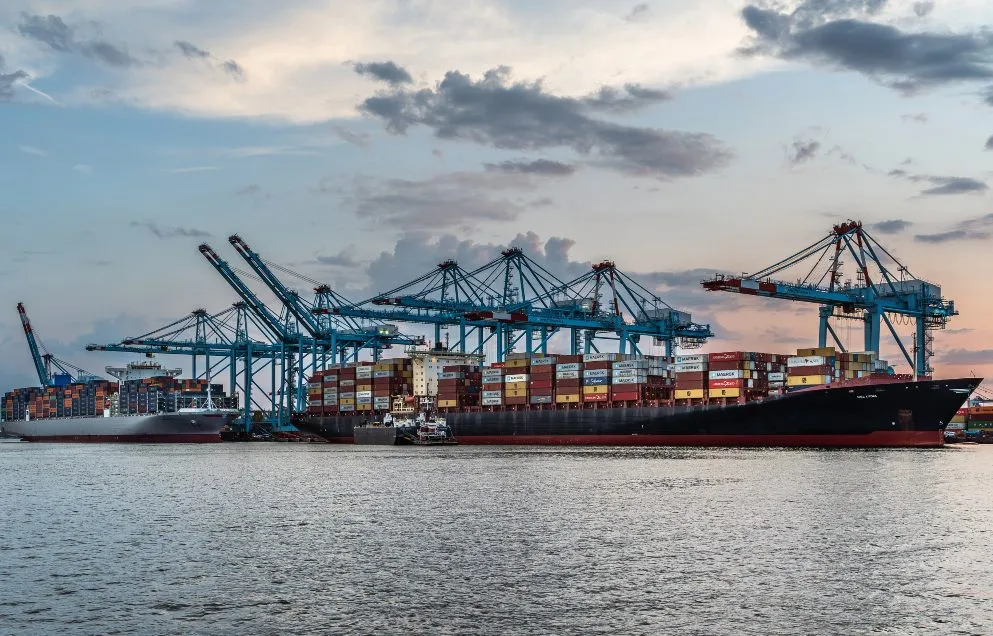
The UK change was supposed to come into effect in 2029. However, earlier this year, a group of retailers including Marks and Spencer, Argos, Next, Currys and Primark, wrote to the Treasury asking for the change to be made more quickly and suggesting a flat £2.60 charge on each small parcel sent to the UK.
The current system, the letter said, represented 'a structural advantage for overseas retailers without a footprint in the UK, who undermine retailers that employ millions of people across the country, pay local taxes and pay import duties'.
Government brings the timetable forward
And the government has taken heed, pulling forward the planned changes to October 2028, and promising to do more to level the playing field for high street businesses.
As part of a broader overhaul, minsters are also planning to extend the rules how VAT is collected for businesses trading through online marketplaces, saying the revenue raised by doing this will go towards improvements to the business rates for local businesses.
"This action tackles the unfair competition and dodgy businesses that are doing real damage to our high streets," said Dan Tomlinson, exchequer secretary to the Treasury.
"And by making sure that tax is paid when its owed, we can raise revenue to put back into improvements to the business rates system for pubs, restaurants, hotels and other high street businesses" Tomlinson added.
Retailers call for faster action
However, the changes to the de minimis system still aren't happening fast enough for the British Independent Retailers Association (Bira).
"We fail to understand the inexplicable delay in implementing this change, even at the so-called accelerated timetable, which remains more than two years away," says CEO Andrew Goodacre.
"Successive governments have stressed the importance of high streets in enhancing communities - we very much hope that the new government shows greater urgency and concern over the crisis on our high streets, an issue of great importance to voters" Goodacre added.
VAT reform receives a warmer response
Bira is more enthusiastic about the planned VAT changes.
"The current regime has long been ripe for reform. Honest retailers who pay the correct taxes should not be disadvantaged by businesses that exploit complexity in the system or fail to meet their VAT obligations," says Goodacre.
"We hope the consultation proceeds as quickly as possible and leads to practical measures that support compliant retailers without creating unnecessary burdens" Goodacre commented.
What the changes mean for UK importers
But while many UK retailers may be set to benefit from the changes to the import tax, those that import goods themselves will have to take the hit - and will need to review their existing processes and pricing models.
Exporters face higher costs in the EU
And meanwhile, those businesses that export into the EU are seeing their costs rise. The new €3 customs duty charge per item will apply to parcels imported from outside the EU - including, of course, the UK.
Importantly, the charge applies per tariff code, rather than simply per order, so that if a shipment contains products from different categories, each with a different tariff code, the charge could increase for each additional code.
So, for example, if a European buys five T-shirts, they'll pay €3 in customs duty, as all T-shirts fall under the same tariff classification; while buying three T-shirts and a watch brings the cost to €6, as the T-shirts and the watch fall under two different tariff classifications.
Steps businesses may need to consider
This means that businesses selling into the EU will need to make sure each product is correctly classified so charges can be calculated properly. You might want to show duties and taxes before payment so that customers understand exactly what they're paying upfront.
You could also consider whether it makes more sense to hold stock in the EU, rather than sending packages from the UK, especially if you're looking at high volumes of goods.
But, says Maroš Šefčovič, European commissioner for trade and economic security, "Platforms and sellers profiting from European consumers must play by the same rules as European businesses. Scrapping the de minimis exemption simply brings our customs system up to speed with how trade works today – resulting in fairer competition, stronger enforcement, better consumer protection."
If you import or export goods and would like to understand how these changes could affect your insurance arrangements, you can do through speaking to our team via the button below.
SME business insurance
Helping your small-to-medium business grow with confidence.
